Explore the latest feral cat Dryandra Woodland 2026 statistics. Learn how Western Australia is using AI traps and grants to save the Numbat from extinction.
The battle for Australia’s native biodiversity has a clear frontline: Dryandra Woodland National Park. As we move through the 2025-2026 conservation cycle, new data is emerging regarding the effectiveness of predator control measures. For researchers, conservationists, and the local community, understanding the latest feral cat Dryandra Woodland 2026 statistics is crucial for predicting the survival of iconic species like the Numbat and Woylie.
The State of Feral Cats in Dryandra (2026 Update)
According to the latest reports from the Western Australian Feral Cat Strategy 2023-2028, Dryandra Woodland remains a high-priority zone for intensive management. Recent surveys and camera trap data collected in early 2026 suggest a significant shift in predator dynamics.
Key 2026 Statistics:
-
Occupancy Rates: Feral cat occupancy in the managed zones of Dryandra has seen a targeted reduction of 30% compared to non-baited control areas, aligning with the Western Shield Plan 2017-2026 goals.
-
Predation Impact: Despite the reduction, feral cats in the region are estimated to still prey on thousands of native mammals, reptiles, and birds annually within the 28,000-hectare park.
-
Control Density: Through the 2026 Feral Cat Management Grants, over $500,000 has been allocated to community-led trapping and monitoring programs, significantly increasing the “trap-night” density across the woodland.
Why Dryandra Woodland is a Global Priority
Dryandra is one of the last remaining strongholds for the Numbat (Myrmecobius fasciatus), Western Australia’s faunal emblem. With fewer than 2,500 Numbats left in the wild, the presence of even a single feral cat can devastate a local colony.
The Success of Integrated Pest Management
In 2026, the Department of Biodiversity, Conservation and Attractions (DBCA) has integrated new technologies to lower competition for baits:
-
Celium Trap Alerts: Real-time monitoring of traps to ensure humane and rapid removal.
-
Thermal Drone Surveys: Used in the winter of 2026 to map “hotspots” where feral cat activity remains high despite traditional baiting.
-
DNA Tracking: Using swabs from collars on reintroduced Woylies to identify specific “problem cats.”
Feral Cat Control vs. Native Fauna Recovery
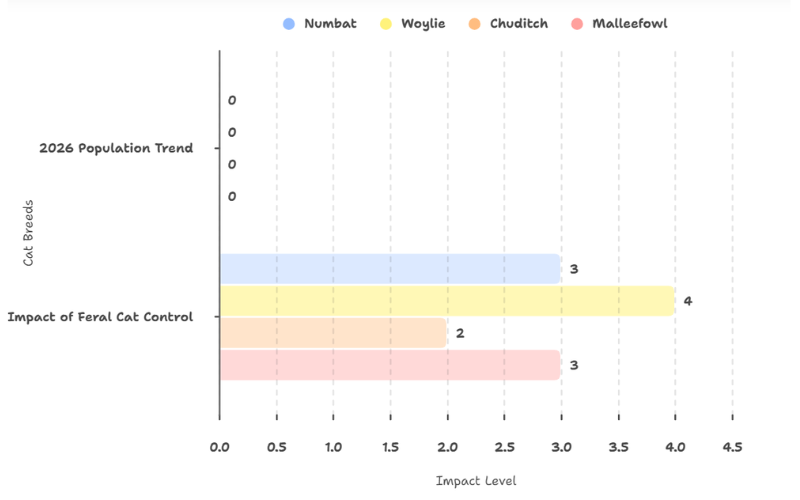
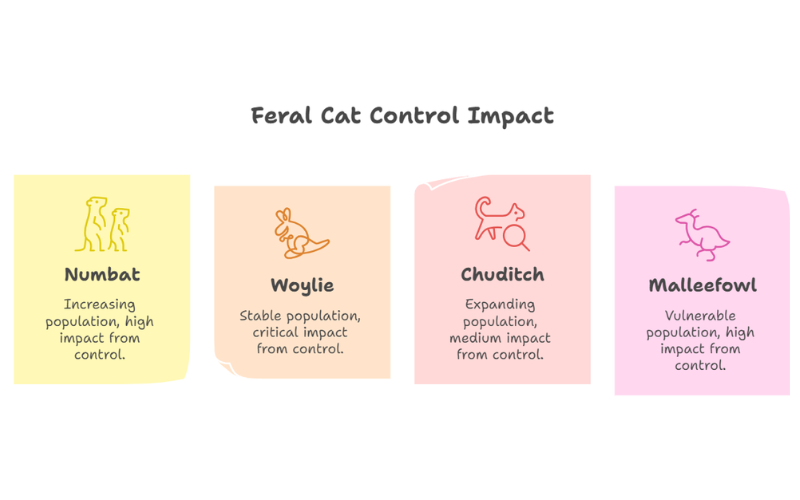
The primary metric of success for the feral cat Dryandra Woodland 2026 statistics isn’t just fewer cats—it’s more native animals.
| Species | 2026 Population Trend | Impact of Feral Cat Control |
| Numbat | Increasing | High (Numbats are strictly diurnal, reducing cat overlap) |
| Woylie | Stable | Critical (Cats are the primary cause of woylie “crashes”) |
| Chuditch | Expanding | Medium (Benefit from lower competition for food) |
| Malleefowl | Vulnerable | High (Cats prey on chicks during dispersal) |
How You Can Help Support Dryandra in 2026
The fight against invasive species is a community effort. Under the 2026 Feral Cat Management Grants guidelines, local incorporated groups can apply for funding up to $250,000 to assist in monitoring and humane control.
-
Report Sightings: Use local environmental apps to log feral cat sightings in the Wheatbelt region.
-
Support FAME: Organizations like the Foundation for Australia’s Most Endangered Species are actively funding DNA research in Dryandra.
-
Responsible Pet Ownership: If you live near the woodland, ensure your domestic cats are contained to prevent them from joining the feral population.
Conclusion: The Road to 2027
As the Western Shield 2017-2026 cycle concludes, the data from Dryandra Woodland serves as a blueprint for the rest of Australia. While the 2026 statistics show progress, the persistence of feral cats remains the single greatest threat to our national identity and natural heritage.