Cat peeing everywhere? Discover why cats urinate outside the litter box and 7 proven solutions to stop it. Includes best products and expert tips.
If your cat keeps peeing all over your house, you know how frustrating it becomes. The bad smells, constant cleaning, and damaged furniture can make life miserable. Many cat owners reach a breaking point where they consider rehoming their beloved pet because nothing seems to work. But here’s the good news: you don’t have to get rid of your cat. With the right approach and tools, you can solve this problem and restore peace to your home. In this guide, we’ll explore why cats urinate outside their litter box and provide proven solutions that actually work.
Why Do Cats Pee Outside the Litter Box?
Before solving the problem, you need to understand the cause. Inappropriate urination isn’t your cat being spiteful there’s always an underlying reason.
1. Medical Issues
Urinary tract infections, kidney disease, diabetes, and bladder stones can cause painful or frequent urination. If your cat suddenly starts peeing outside the box, visit your veterinarian first. Medical issues must be ruled out before addressing behavioral causes.
2. Litter Box Problems
Cats are extremely particular about their bathroom habits. Common litter box issues include:
- Dirty litter boxes – Cats avoid dirty boxes
- Wrong location – Too noisy, high-traffic areas
- Box size – Too small for your cat
- Litter type – Strong scents or wrong texture
- Not enough boxes – Rule of thumb: one box per cat, plus one extra
3. Stress and Anxiety
Changes in the household can trigger stress-related urination:
- New pets or family members
- Moving to a new home
- Changes in routine
- Loud noises or construction
4. Territory Marking
Unneutered males and unspayed females are more likely to mark territory. Even spayed/neutered cats may mark if they feel threatened by outdoor cats or new pets.
5. Age-Related Issues
Senior cats may develop arthritis, making it painful to climb into high-sided boxes, or cognitive decline that affects bathroom habits.
Step-by-Step Solutions to Stop Inappropriate Urination
Step 1: Visit Your Veterinarian
This is non-negotiable. Schedule a checkup to rule out medical causes. Your vet can diagnose UTIs, kidney problems, or other health issues that require treatment.
Step 2: Deep Clean All Affected Areas
Regular cleaning products won’t work cats can still smell urine residue and will continue marking the same spots.
Solution: Use an Enzymatic Cleaner
Enzymatic cleaners like Nature’s Miracle or Rocco & Roxie Professional Strength Stain & Odor Eliminator break down urine proteins at the molecular level, completely eliminating odors.
How to use:
- Find all urine spots (use a UV blacklight for hidden areas)
- Soak the area thoroughly with enzymatic cleaner
- Let it sit for 10-15 minutes
- Blot dry and let air dry completely
- Repeat if necessary
This is the most critical step if your cat can still smell old urine, they’ll keep going back to that spot.
Step 3: Optimize Your Litter Box Setup
Litter Box Checklist:
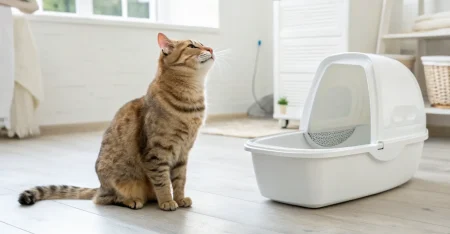
- Use large, uncovered boxes (cats prefer privacy but need space)
- Place boxes in quiet, accessible locations
- Scoop daily, change litter weekly
- Wash boxes monthly with mild soap
- Have one box per cat, plus one extra
Try Cat Attract Litter Additive
If your cat has developed an aversion to the litter box, Dr. Elsey’s Cat Attract is a proven solution. This herbal litter additive uses natural herbs to draw cats back to their boxes. Many cat owners report success within days of using it.
Step 4: Reduce Stress with Pheromone Products
Feliway Diffusers release synthetic cat pheromones that create a calming environment. These are particularly effective for:
- Multi-cat households
- Recent moves or changes
- Anxiety-related urination
Plug in diffusers near areas where your cat spends time. Most cats show improvement within 1-2 weeks.
Step 5: Make Inappropriate Spots Unappealing
While retraining your cat:
- Cover furniture with waterproof covers
- Place aluminum foil on targeted areas (cats dislike the texture)
- Use double-sided tape on surfaces
- Block access to problem rooms temporarily
Step 6: Provide Multiple Litter Options
Some cats are picky about litter texture or scent. Try offering:
- Unscented clumping litter
- Fine-grain litter
- Paper-based litter
- Different box styles in different locations
Let your cat choose their preference.
Step 7: Address Territorial Issues
If outdoor cats trigger marking behavior:
- Block window views with frosted film
- Use motion-activated sprinklers outside to deter strays
- Keep blinds closed in problem areas
- Ensure your cat is spayed or neutered
Essential Products That Help
Here are the most effective products for solving cat urination problems:
For Cleaning:
- Enzymatic cleaner (Nature’s Miracle, Rocco & Roxie)
- UV blacklight flashlight (to find hidden spots)
- Waterproof mattress/furniture covers
For Litter Box Training:
- Dr. Elsey’s Cat Attract litter or additive
- Large, uncovered litter boxes
- Unscented, clumping litter
- Litter box mats (to catch tracking)
For Stress Reduction:
- Feliway Classic Diffuser or Spray
- Calming cat treats
- Interactive toys (to reduce boredom)
How Long Does It Take to Fix the Problem?
With consistent effort, most cat owners see improvement within 2-4 weeks. However, every cat is different. Key factors include:
- Severity of the habit
- Underlying cause
- Consistency of your approach
- How thoroughly you clean
Patience is essential. Cats don’t understand punishment, so never yell at or punish your cat for accidents. Positive reinforcement works much better.
When to Seek Professional Help
If you’ve tried everything and your cat still urinates inappropriately, consult:
- Veterinary behaviorist – Specializes in complex behavioral issues
- Certified cat behavior consultant – Provides personalized training plans
Some cats have deep-rooted anxiety or trauma that requires professional intervention.
Prevention Tips for the Future
Once you’ve solved the problem:
- Maintain clean litter boxes religiously
- Keep multiple boxes available
- Monitor for signs of stress or illness
- Stick to routines your cat is comfortable with
- Provide environmental enrichment (toys, climbing trees, window perches)
Living with a cat that pees outside the litter box is incredibly frustrating, but rehoming your cat shouldn’t be your first option. In most cases, this problem is solvable with the right approach. Start by ruling out medical issues, then focus on proper cleaning, litter box optimization, and stress reduction. Products like enzymatic cleaners, cat attractant litter, and Feliway diffusers can make a dramatic difference.
Remember: your cat isn’t doing this to spite you. They’re trying to tell you something is wrong. With patience, understanding, and the right tools, you can keep your beloved cat and enjoy a clean, odor-free home.
Your cat can change and so can your living situation. Don’t give up just yet.