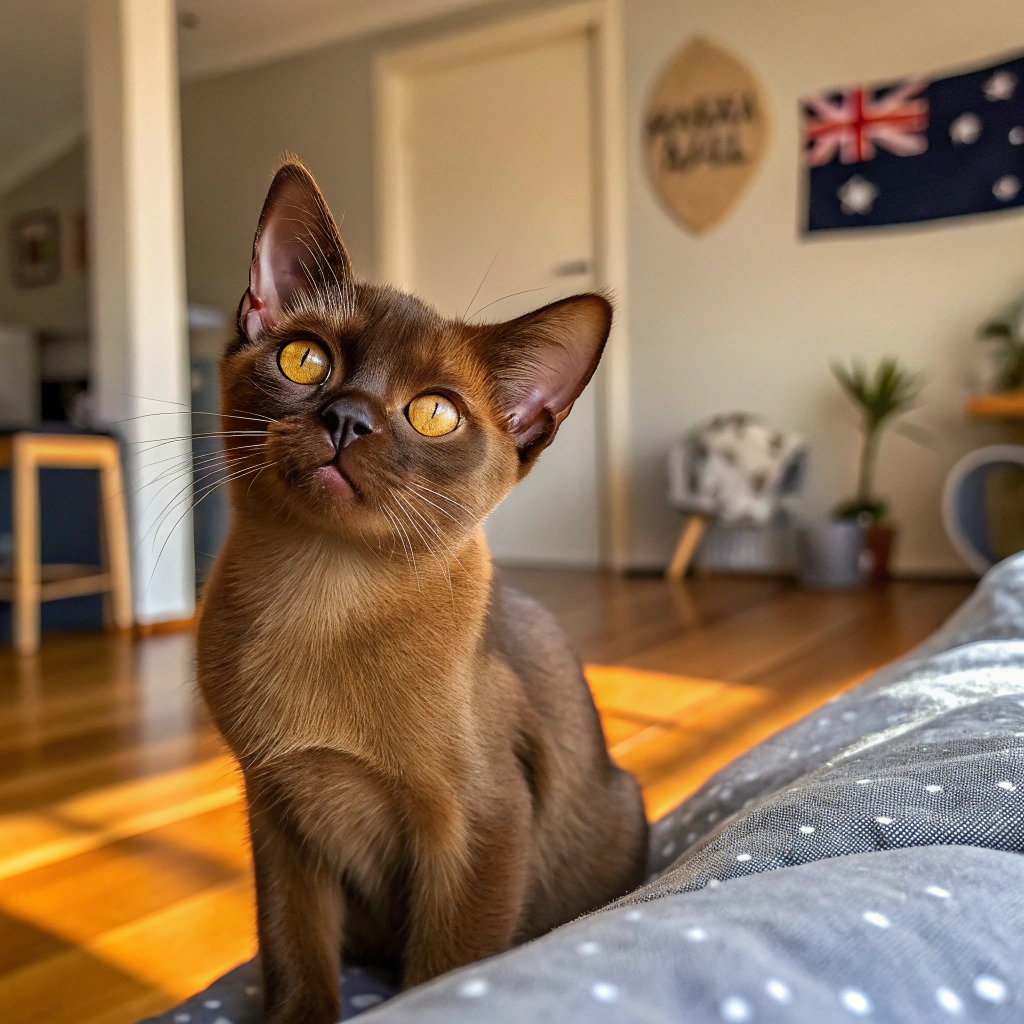
Looking for a Burmese kitten in Melbourne? Here's how to find a registered breeder, what Victorian law requires of anyone selling a kitten, the DNA tests to ask about, what should come with your kitten, and how to spot a kitten scam.
Burmese are one of the most popular pedigree cats in Victoria, and good breeders often have waiting lists. That popularity also attracts backyard breeders and scammers, so it pays to know what to look for before you start answering advertisements.
Advertisement
This guide explains where to find Burmese kittens in Melbourne and the rest of Victoria, the rules Victorian sellers have to follow, how to check a breeder, the health tests to ask about, what should come with your kitten, and how to avoid kitten scams.
Is a Burmese the right cat for you?
Before you start looking, make sure the breed suits your home. Burmese are affectionate, playful and very people-oriented. They usually want to be part of whatever you're doing, and they generally don't enjoy long hours alone. Many breeders recommend two cats for homes where everyone is out during the day.
Burmese are also trusting and confident, which makes them vulnerable outdoors. Most breeders ask buyers to keep them indoors or with access to a secure enclosure, and many Victorian councils have cat curfews or containment rules anyway.
Burmese in Australia have a higher risk of diabetes than many other cats, so you'll need to keep your cat lean. Our full guide to Burmese cats in Australia covers personality, colours and health in detail.
Where to find Burmese kittens in Victoria
Registered breeders
The safest source is a breeder who belongs to a recognised cat council. In Victoria, the Feline Control Council (Victoria), known as the FCCV, is one of the cat organisations approved by the state government as an "applicable organisation". Breeders also register with other councils, including the member bodies of the Australian Cat Federation and the Coordinating Cat Council of Australia.
Members agree to follow their council's rules and code of ethics. Their kittens can be registered with the council and come with pedigree papers.
Contact the council or a Burmese breed club and ask for a list of Burmese breeders in Victoria. Good breeders are usually happy to talk about their cats even when they have no kittens available, and many keep a waiting list.
Cat shows
Cat councils run shows throughout the year in Melbourne and regional Victoria. A show is one of the best ways to see adult Burmese in all the colours, talk to several breeders in one day, and get a sense of the breed's temperament. Most breeders don't sell kittens at shows, but many take enquiries.
Rescue and rehoming
Burmese occasionally come up for adoption through breed rescue networks, breeders rehoming retired breeding cats, and general shelters. Adopting an adult means you know its personality from the start. Our guide to kittens for adoption in Melbourne lists shelters and rescue groups.
Online advertisements
Many genuine breeders advertise online, but so do backyard breeders and scammers. Treat any advertisement as a starting point, and check it against the Victorian rules below before you contact the seller.
What Victorian law requires of sellers
Victoria has some of the strictest rules in Australia for selling cats and dogs. Knowing them makes it much easier to spot a seller to avoid.
Source number and microchip number in every advertisement
Anyone advertising a kitten for sale or to give away in Victoria must include:
- a source number from the Pet Exchange Register, and
- the kitten's microchip number.
They are two different numbers. A source number identifies the seller, and a microchip number identifies the kitten. An advertisement missing either one doesn't comply with the law, and both the seller and the publisher of the advertisement can be committing an offence.
You can check that a seller's source number is valid on the Pet Exchange Register website before you buy. Non-compliant advertisements can be reported to Animal Welfare Victoria through the same website.
Microchipping before sale
All cats must be microchipped before they are sold or given away in Victoria. A vet can't exempt a kitten from this so that it can be advertised without a chip.
Breeder registration
How a breeder is regulated depends on how many fertile female cats they keep and whether they belong to an applicable organisation:
- Recreational breeders are breeding members of an applicable organisation, such as the FCCV, with up to 10 fertile female cats. They must follow their organisation's rules and code of ethics, and they enrol on the Pet Exchange Register to get a source number.
- Domestic animal businesses are breeders with 3 to 10 fertile female cats who are not members of an applicable organisation. They must register with their local council and comply with Victoria's Code of Practice for the Operation of Breeding and Rearing Businesses.
- Anyone who holds kittens for sale, including a broker who didn't breed them, must also be registered with their council as a domestic animal business.
Ask a breeder which organisation they belong to, and check with that organisation.
Your obligations as an owner
Once your kitten is home:
- Register your cat with your local council once it is over three months old, and renew the registration each year.
- Desexing. Many Victorian councils require registered cats to be desexed unless they are exempt, for example because they are kept for breeding by a member of an approved organisation, or a vet certifies that desexing would harm the cat's health. Fees are much lower for desexed cats.
- Update the microchip registry with your details when ownership is transferred.
- Check your council's cat curfew or containment rules.
Our guide to cat laws in Australia covers registration and containment in more detail.
How to check a Burmese breeder
Questions to ask
- Which cat council are you registered with, and what is your cattery prefix?
- What is your Pet Exchange Register source number?
- Can I meet the kitten's mother, and see where the kittens are raised?
- What DNA tests have the parents had, and can I see the results?
- Is there any history of diabetes or feline orofacial pain syndrome in your lines?
- How old will the kitten be when it comes home?
- What vaccinations, health checks and paperwork come with the kitten?
- Is the kitten desexed, or is there a desexing agreement?
- Do you offer a health guarantee, and will you take the cat back if I can no longer keep it?
A good breeder will answer all of these readily, and will ask you just as many questions about your home, your routine and whether there will be another cat for company.
Health tests for Burmese
Several inherited conditions affect Burmese, and responsible breeders test for the ones that can be tested:
- Burmese hypokalaemia, which causes episodes of muscle weakness from low blood potassium. A DNA test identifies carriers, so breeders can avoid carrier-to-carrier matings.
- GM2 gangliosidosis, a rare, fatal nervous system disease. A DNA test is available.
- Burmese head defect, a severe, fatal craniofacial defect found in lines with American "Contemporary" Burmese ancestry. A DNA test is available, and it matters most for cats with American ancestry.
There's no DNA test for diabetes or feline orofacial pain syndrome (FOPS), so ask about the breeder's experience with them in their cats and related lines.
Advertisement
Signs of a well-raised kitten
- The kitten has been raised in the home, around normal household sounds and people.
- It's curious and confident rather than fearful, and comfortable being handled.
- Its eyes and nose are clear, its coat is clean and glossy, and its bottom is clean.
- The mother and any other adult cats look healthy and relaxed.
- The premises are clean, and the breeder isn't selling several breeds at once.
Age at which kittens go home
RSPCA Victoria advises that no trustworthy seller will rehome a kitten before eight weeks of age, because kittens younger than that aren't fully weaned and have poor immune systems. Many registered pedigree breeders keep kittens until they are about 12 weeks old or older, so they've had more of their vaccinations and been desexed before they leave.
What should come with your kitten
A Burmese kitten from a registered breeder should come with:
- Pedigree registration papers from the breeder's cat council, usually on the non-breeding (pet) register.
- A microchip, with the transfer of ownership done or explained to you.
- Vaccination records. Kittens are usually vaccinated from 6 to 8 weeks of age, then every 2 to 4 weeks until they're 16 weeks or older. In Australia the core vaccine is called F3. Your kitten may need one or more further vaccinations after it comes home, so check with your vet.
- Worming and flea treatment records.
- A vet health check, done shortly before the kitten goes home.
- Desexing, or a written desexing agreement if the kitten is too young.
- A written contract covering the price, any health guarantee, desexing terms, and what happens if you can't keep the cat.
- Copies of the parents' DNA test results, or a written statement of their status.
- Information about the kitten's food and routine, and ideally a small supply of the food it's used to.
Avoiding kitten scams
Pet scams are common in Australia. The ACCC's Scamwatch received 1,684 reports of pet scams in 2022, with losses of $2.3 million. Most involved puppies, but kitten scams increased that year.
A typical scam is an advertisement on a classifieds site or social media for a kitten you can't see in person. The "seller" asks for a deposit or full payment, usually by bank or money transfer, and then asks for more money for transport, vaccinations, insurance or a vet emergency. The kitten never exists.
Warning signs:
- The price is much lower than other Burmese breeders charge.
- You can't visit, or a live video call keeps being postponed.
- There's no source number or microchip number in a Victorian advertisement, or the source number doesn't check out on the Pet Exchange Register.
- The seller won't name their cat council, or says registration papers cost extra, will arrive later, or aren't needed for a pet.
- Pressure to pay quickly, for example because "other buyers are interested".
- Payment only by bank transfer, gift cards or cryptocurrency.
- Requests for extra money after the first payment.
Scamwatch suggests searching for the exact wording of the advertisement and doing a reverse image search on the photos. If the same text or pictures appear on several websites, you're probably dealing with a scammer.
Never pay a deposit for a kitten you haven't seen, at least on a live video call, from a breeder whose registration you haven't confirmed. Keep a record of all payments and get a receipt and a written contract. Money sent to a scammer by bank transfer is rarely recovered.
How much does a Burmese kitten cost?
A pedigree Burmese from a registered breeder costs considerably more than a domestic kitten. The price reflects DNA testing and vet care for the parents, council registration, vaccinations, microchipping, desexing and the cost of raising a litter properly at home. Prices vary between breeders, and show or breeding cats cost more.
Compare several registered breeders rather than relying on a single figure, and remember the ongoing costs: food, litter, council registration, annual vet visits and vaccinations, parasite control, and pet insurance if you choose it.
Preparing for your kitten
Before your kitten comes home:
- Kitten-proof your home. Tie up blind cords and electrical cables, put away string, hair ties and small objects, and remove toxic plants, especially lilies.
- Set up a quiet room with a bed, litter tray, food, water, a scratching post and a few toys, where your kitten can settle in for the first few days.
- Buy the same food the breeder has been feeding, and change gradually later if you want to.
- Book a vet visit for the first week, and plan the remaining vaccinations.
- Plan for company and play. A Burmese kitten needs daily play and plenty of attention. See our guide to interactive cat toys and our kitten supplies starter kit review.
Feed your kitten at least three meals a day until it's six months old. Our guide to how often to feed your cat covers portions and routines as your kitten grows.
Frequently asked questions
How do I check a Victorian kitten advertisement is legitimate?
Check that it includes both a Pet Exchange Register source number and the kitten's microchip number, then check the source number on the Pet Exchange Register website. Ask the breeder which cat council they belong to and confirm their registration with that council.
At what age can a Burmese kitten leave its mother?
Never before eight weeks. Many registered breeders keep Burmese kittens until about 12 weeks or older, so they're better socialised, further through their vaccinations and often desexed.
Are Burmese kittens sold desexed?
Pet kittens from registered breeders are usually desexed before they leave, or sold with a contract requiring desexing by a set age. Many Victorian councils also require registered cats to be desexed.
Should I get one Burmese or two?
If someone is home for much of the day, one Burmese can do well. If your home is empty for long hours, many breeders recommend two cats, as Burmese generally don't like being alone.
What colours do Burmese kittens come in?
In Australia, Burmese come in brown, blue, chocolate, lilac, red and cream, plus tortoiseshell versions of brown, blue, chocolate and lilac. Availability depends on the breeder.
Is a cheap Burmese kitten a good deal?
Usually not. A kitten priced well below registered breeders is likely to be unregistered, from untested parents, or not real at all.
Can I buy a Burmese kitten from another state?
Yes, many people do. Check the breeder's registration with their cat council, ask about health testing, and arrange to meet the kitten in person or at least on a live video call before paying. Ask how the kitten will travel and who pays.
Advertisement